
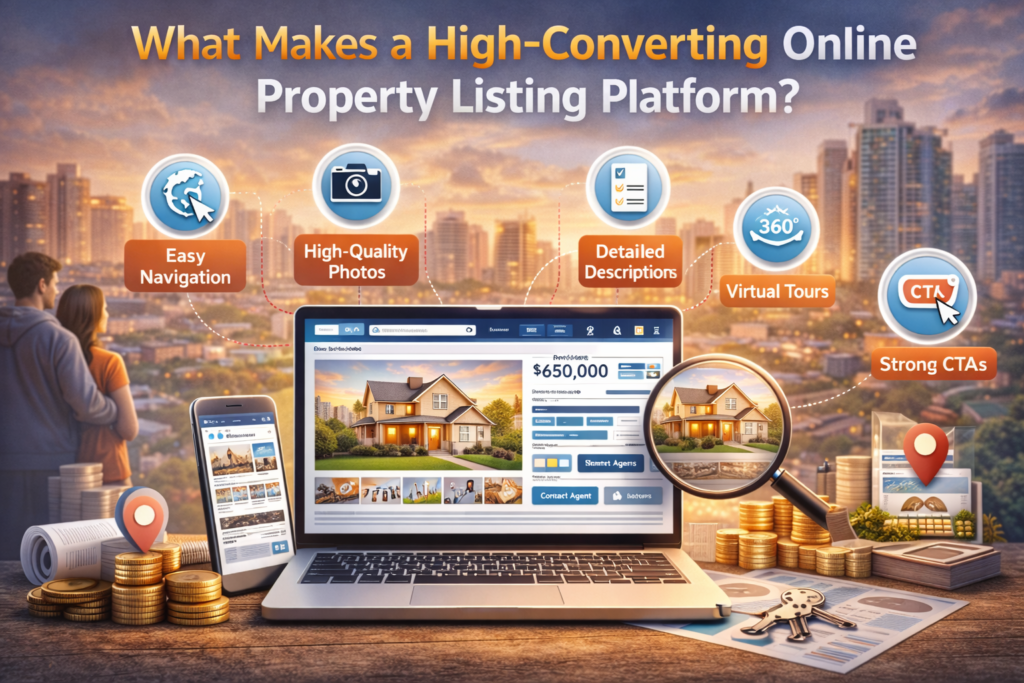

In today’s digital-first world, the way people buy and sell homes has transformed dramatically. The real estate industry is no longer driven solely by on-site visits and newspaper ads. Instead, buyers begin their journey online—researching neighborhoods, comparing prices, and shortlisting properties before ever speaking to an agent.
In such a competitive landscape, simply listing properties isn’t enough. A high-converting online property listing platform must do more than display images and prices—it must guide users seamlessly from curiosity to inquiry. Let’s explore what truly makes a platform convert visitors into serious buyers and sellers.
1. User-Centric Design That Builds Trust
First impressions matter. When users land on a property platform, they immediately judge its credibility based on layout, design, and ease of navigation.
A high-converting platform offers:
- Clean, uncluttered interface
- Fast-loading pages
- Mobile responsiveness
- Clear call-to-action (CTA) buttons
Home buyers searching for flats for sale in metropolitan cities or luxury villas in gated communities often browse on mobile devices. If a platform isn’t optimized for smartphones, potential leads disappear instantly.
For instance, someone searching for the best real estate websites in india is likely comparing platforms. Ranking for such terms brings highly targeted traffic.
2. Advanced Search and Smart Filtering
Property buyers want control. They don’t want to scroll endlessly. A powerful search feature dramatically increases conversions.
Essential features include:
- Location-based filtering with map view
- Budget sliders
- Filters for amenities (parking, lift, security)
- Sorting by newest listings, price, or popularity
- Keyword search for phrases like “2 BHK apartment near metro station”
Platforms that allow hyper-specific queries such as ready-to-move apartments under 50 lakhs or new residential projects with clubhouse meet buyer intent more effectively.
Smart filtering reduces bounce rate and keeps high-intent users exploring.
3. High-Quality Visual Content
In real estate, visuals sell.
A listing with blurry photos will struggle, regardless of how attractive the price is. High-converting platforms prioritize:
- Professional property photography
- Virtual tours and 360-degree views
- Floor plans with dimensions
- Drone shots for large properties
- Video walkthroughs
Buyers today expect immersive experiences. A 360-degree walkthrough increases engagement time and helps prospects emotionally connect with the property.
When users can visualize their future home clearly, they are far more likely to click “Contact Agent.”
4. Detailed and Transparent Property Descriptions
Beyond visuals, the written content matters just as much.
A high-performing listing includes:
- Accurate square footage
- Property age and condition
- Nearby schools, hospitals, and transport hubs
- Clear pricing breakdown
- Legal and ownership status
Long-tail keyword phrases like residential property investment opportunities in Tier-2 cities or affordable housing projects with EMI options should appear naturally in descriptions when relevant.
Transparency builds credibility. Hidden costs or vague details drive users away. Clear and honest information increases inquiry rates.
5. Strong Local SEO Optimization
For a property platform to convert, it must first be discoverable. Search engine visibility is crucial.
Effective SEO strategies include:
- Optimized title tags and meta descriptions
- Location-based landing pages
- Schema markup for property listings
- Fast site speed
- High-quality backlinks
Similarly, optimizing for phrases like buy property online in Delhi NCR or commercial office space for rent in Mumbai ensures the platform captures users with strong purchase intent.
Organic visibility directly impacts lead volume.
6. Credible Reviews and Social Proof
Trust is the foundation of conversion.
Users are cautious when making high-value purchases. Reviews, ratings, and testimonials significantly influence decisions.
High-converting platforms include:
- Verified user reviews
- Agent ratings
- Transaction success stories
- Customer testimonials with photos
Social proof reassures buyers that others have successfully used the platform. It reduces uncertainty and builds confidence in the decision-making process.
7. Seamless Lead Capture Mechanisms
Even the most attractive listing fails if contacting the seller is complicated.
Effective lead capture features include:
- Prominent “Schedule a Visit” buttons
- Instant callback options
- WhatsApp integration
- Simple contact forms
- Chatbots for real-time assistance
Forms should request minimal information—name, phone number, and email. Long forms reduce conversions.
Additionally, platforms should allow buyers to save listings, compare properties, and receive alerts for price drops. These micro-interactions keep users returning.
8. Data-Driven Personalization
Modern platforms use data to personalize the experience.
If a user searches for 3 BHK apartments in Bangalore with parking, the homepage should later suggest similar listings. AI-driven recommendation engines improve relevance and increase the chances of inquiry.
Personalized email alerts, retargeting ads, and dynamic suggestions significantly improve conversion rates.
Understanding user behavior—what they click, how long they stay, what they filter—helps refine recommendations and boost engagement.
9. Clear Pricing Insights and Market Analytics
Serious buyers analyze numbers carefully. A high-converting platform provides market intelligence such as:
- Price trends in a locality
- Average cost per square foot
- Rental yield data
- Historical price appreciation
Such insights position the platform as a trusted advisor rather than just a listing site.
For investors searching for high ROI property investment opportunities, analytics tools can be the deciding factor between browsing and contacting.
10. Secure and Verified Listings
Fraud is a major concern in online property transactions.
High-converting platforms build credibility by:
- Verifying property ownership documents
- Tagging “Verified Listing” badges
- Removing duplicate listings
- Implementing anti-fraud measures
When buyers feel secure, they are more willing to share contact information and schedule visits.
Security directly influences lead quality.
11. Mobile App Integration
A strong mobile app enhances user retention.
Push notifications about new listings, price drops, and scheduled visits keep prospects engaged. Many users check properties multiple times before deciding.
An app with saved searches, instant chat support, and smooth navigation improves convenience—leading to faster decisions.
Convenience equals higher conversions.
12. Fast Loading Speed and Technical Performance
Technical performance impacts both SEO and user experience.
Key performance indicators include:
- Page load under 3 seconds
- Optimized images
- Secure HTTPS encryption
- Smooth navigation without glitches
Even a one-second delay can significantly reduce conversions. Real estate buyers are impatient when browsing multiple options.
Speed creates satisfaction.
13. Strong Agent Profiles and Branding
Agents are critical to closing deals.
A high-converting platform highlights:
- Agent experience
- Past transactions
- Customer reviews
- Professional certifications
When buyers see experienced professionals with verified credentials, they are more confident reaching out.
Personal branding builds trust and increases inquiries.
14. Educational Content and Buying Guides
Not every visitor is ready to purchase immediately. Some are in research mode.
Providing blog articles, guides, and FAQs helps nurture these leads.
Examples include:
- First-time homebuyer guides
- Steps to verify property documents
- How to apply for a home loan
- Tax benefits on property purchase
Educational content builds authority and keeps users on the platform longer, increasing the likelihood of conversion later.
15. Clear Call-to-Action Strategy
Conversion depends heavily on how effectively CTAs are placed.
High-performing platforms use:
- “Book Site Visit Today”
- “Get Free Consultation”
- “Download Brochure”
- “Request Price Details”
CTAs should be visible but not intrusive. Balanced placement improves user flow without overwhelming visitors.
Final Thoughts
A high-converting online property listing platform is not built on flashy design alone. It is a strategic combination of user experience, trust signals, transparency, strong SEO, and seamless communication.
In the evolving real estate ecosystem, platforms must function as digital advisors—guiding users through search, comparison, and inquiry with clarity and confidence.
When advanced search filters, immersive visuals, verified listings, strong local SEO, and personalized recommendations work together, conversions naturally increase.
Ultimately, success lies in understanding buyer psychology. People don’t just buy properties—they buy security, lifestyle, and future growth. A platform that addresses these emotional and practical needs will always outperform the rest.
In a competitive online market, those who prioritize user experience, transparency, and data-driven optimization will dominate the next wave of digital property transactions.